EN

Maximizing Stainless Steel Chain Longevity in Inventory
A stainless steel chain may look like a stable inventory item, but long-term condition depends on what happens between receiving and dispatch. For a wholesale jewelry buyer, the practical question is whether storage protects finish, link shape, and product information. A controlled routine helps keep stock easier to inspect, list, pick, and replenish.
From a wholesale buyer viewpoint, longevity begins with information completeness. Rather than relying on a broad material label, break each stainless steel chain into attributes that can be checked: the stated material or grade, finish, link style, dimensions, closure, coating or color treatment if applicable, and the storage instructions supplied with it. A visually appealing detail can matter to an assortment, but it should not substitute for confirming the evidence behind the item record.
Why inventory practices matter for a stainless steel chain
Stainless steel is commonly chosen for jewelry because a stainless steel chain made from chromium-containing steel is generally more resistant to corrosion than ordinary carbon steel. That is useful context, not a promise that all chains or finishes tolerate every warehouse condition. Moisture, residues, abrasive contact, packaging pressure, mixed-metal contact, and harsh chemicals can still make stock harder to present or inspect. The better inventory plan depends on the chain construction, finish, climate, packaging, and how often the SKU is handled.
Chain longevity is often framed as a material question, yet the day-to-day result is shaped by the workflow. A stainless steel chain that arrives clean, documented, and separated can remain simple to assess months later; a similar item that is compressed with incompatible pieces or picked repeatedly without controls may need more labor before sale. This matters when buyers assemble assortments rather than assess one piece alone.
Start at receiving: create a condition baseline
Do not put any stainless steel chain directly into sellable inventory the moment a carton is opened. Use receiving to establish a baseline that future checks can use. Match the carton or supplier document to the SKU, then inspect a representative quantity—or every item when the order size and risk justify it—for the points most likely to affect merchandising and fulfillment.
- Confirm the item code, link style, length, width, closure, color, and stated material details against the purchase record.
- Check for tangling, flattened links, sharp edges, closure alignment, surface residue, scratches, discoloration, or packaging moisture.
- Photograph or note exceptions before stock is mixed with earlier receipts.
- Record the receipt date, supplier lot or batch reference when available, and the person who completed the check.
This is not about treating every variation as a defect; it creates traceable information. If a buyer later notices a finish difference or recurring tangle issue, the team can review the relevant receipt and ask a focused supplier question rather than relying on memory.
Store chains to reduce avoidable contact and contamination
A cool, dry, clean storage area is a sensible default for stainless steel chain inventory. Avoid placing chains close to cleaning chemicals, chlorine-based products, or locations where spills and high humidity are difficult to control. Use observed conditions and supplier guidance rather than assuming one target fits every chain.
Physical separation is equally important. For each stainless steel chain, individual sleeves, compartment trays, or secured cards can reduce link-on-link rubbing and keep neighboring finishes from creating confusion during picking. Choose packaging that holds the chain in a relaxed, supported position rather than sharply bending, knotting, or compressing it. For longer chains, use a consistent fastening method so the clasp does not catch a link during counting or removal.
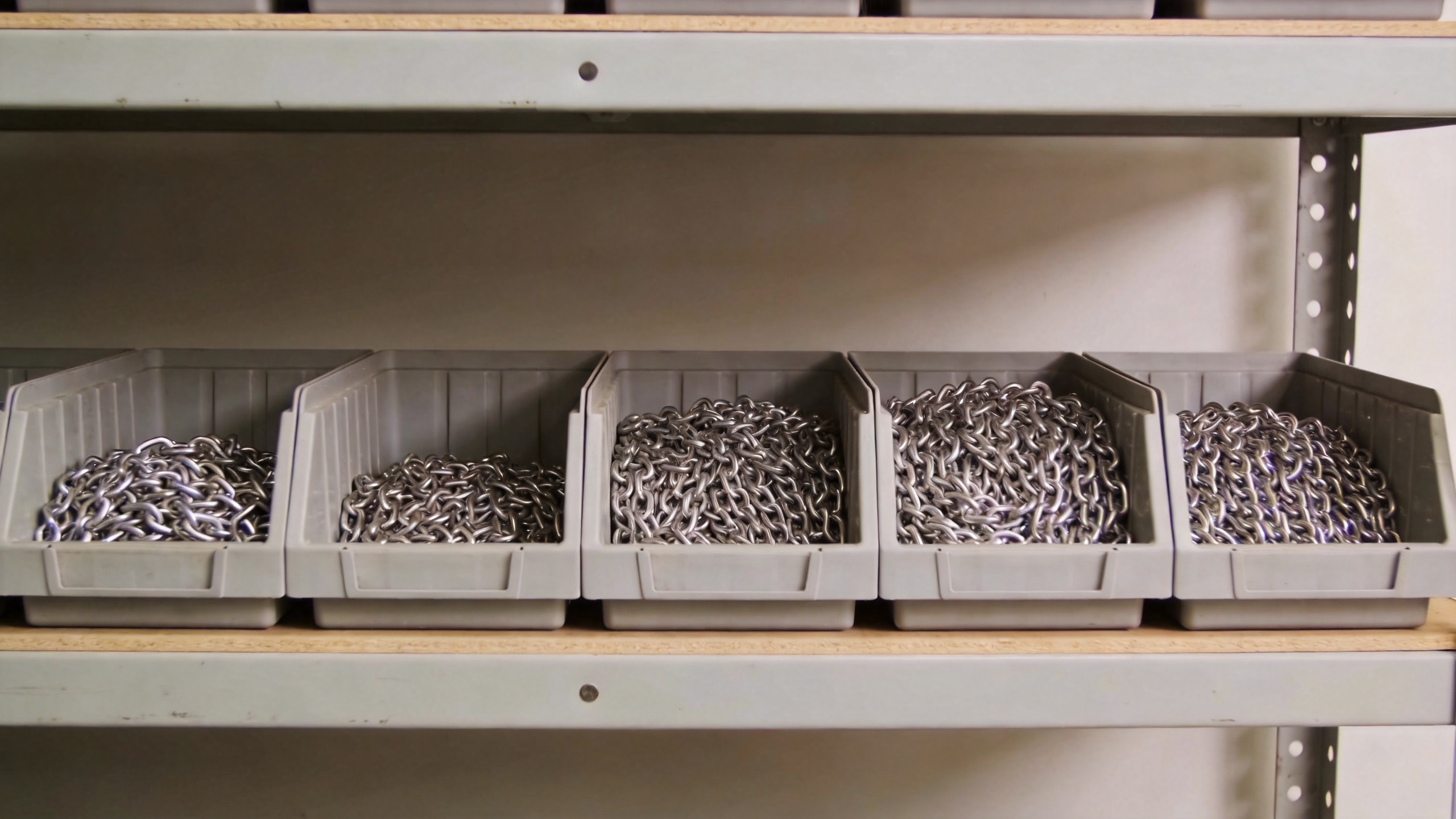
Use a simple location and packaging standard
Consistency prevents small handling issues from becoming inventory problems. Label the outer package with the SKU and storage location; keep the product record accessible through the same identifier. If a chain is removed for photography, sampling, or quality review, return it using the original packaging standard or document the replacement. If the chain will be evaluated mainly for an online listing, prioritize attributes and condition notes that can be described clearly. If it is intended for a physical display, protect it from repeated untracked try-on and display handling.
Handle stock with a pick-and-return discipline
Many inventory marks on a stainless steel chain are introduced after receiving, not before it. Train handlers to use clean, dry hands and a cleared work surface. Keep food, cosmetics, adhesive residues, and unnecessary tools away from the packing station. When several styles are compared, return one chain to its identified location before opening the next. This reduces swaps, tangles, and record gaps.
For every stainless steel chain used as a sample, create a separate status such as “display,” “photo,” “inspection,” or “not for immediate dispatch.” This protects sellable stock from being mixed with handled pieces and gives the team a clear review point before a sample returns to inventory. Before comparing options, clarify whether the piece is intended for sale, photography, showroom review, or supplier feedback.
Rotate and inspect inventory without overhandling it
Rotation is not only for perishable goods. In jewelry inventory, a periodic review can identify packaging fatigue, product-location mismatches, moisture exposure, and slow-moving items that have not been checked since receipt. Set a review rhythm that fits turnover and storage conditions—more frequent for display samples and high-touch SKUs, less frequent for sealed reserve stock that remains dry and undisturbed.
During a review, inspect a practical stainless steel chain sample and compare it with the receiving baseline. Look for surface haze, dust, residue, discoloration, deformation, closure problems, and label errors. Record findings at the SKU or lot level. Do not polish or clean every item automatically; unnecessary treatment can add handling risk. Instead, isolate questionable pieces and confirm the appropriate method with the supplier when the finish, coating, or construction is unclear.
Use conservative cleaning and escalation rules
When a stainless steel chain in stock needs cleaning before inspection or dispatch, start with the least aggressive method compatible with the supplier’s instructions. General stainless steel jewelry care guidance often recommends mild soap, warm water, gentle wiping or brushing, thorough rinsing, and complete drying. The exact approach may not suit every plated, coated, stone-set, or mixed-material item, so the product specification should lead the decision.
Avoid bleach, chlorine-based cleaners, and unapproved abrasive tools unless the supplier has documented compatibility. If a chain shows recurring spotting, unexpected color change, or roughness, document the condition and segregate the item instead of making a broad performance claim. A useful next question is whether the stated material, finish, storage history, and cleaning exposure are documented for the affected SKU.
Make longevity measurable with inventory records
The goal is a short, consistent record that turns a vague durability concern into an actionable purchasing conversation. For each stainless steel chain SKU, keep these fields that help the team compare future receipts and storage outcomes:
- SKU, supplier reference, received date, and lot reference when supplied
- Stated material, finish, dimensions, closure, and packaging format
- Receiving-check result and photos for exceptions
- Storage location, sample status, and inventory-review date
- Observed issue, corrective action, and supplier follow-up status
These records also improve product content. Clear attributes reduce the risk that a style description is mistaken for a documented specification. They help a retail team group related pieces with more confidence and help an e-commerce team prepare listings that say what is known, rather than overpromising what has not been verified.
A practical checklist before you replenish
- Review the stored condition of a representative sample from the current batch.
- Compare new and previous receipt details: finish, dimensions, closure, packaging, and documented material information.
- Check whether handling, display, or storage conditions have created repeated issues.
- Update the SKU record with condition notes and supplier questions before placing the next order.
- Keep replenishment stock separated from display or photography samples until each status is confirmed.
For Guangzhou Olivia Jewelry Co., Ltd., this approach aligns with a stainless steel jewelry wholesale focus: help buyers organize product information and ask the right questions before expanding an assortment. Confirm relevant specifications for each chain and finish.
Conclusion
Maximizing stainless steel chain longevity in inventory is less about a single storage trick and more about disciplined receiving, dry and organized storage, careful handling, periodic review, and documented escalation. A stainless steel chain can be a practical part of a wholesale jewelry range when its condition and specifications remain clear from receipt through fulfillment. Start with a repeatable checklist, protect the chain from avoidable contact and contaminants, and use each inspection to improve the next purchase decision.

 Hot News