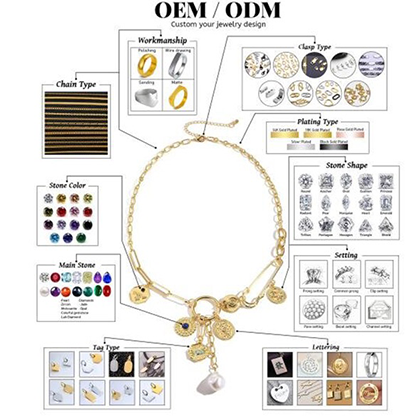
Costume jewelry earrings wholesale stands apart due to its low barrier to entry and rapid stock turnover. Unlike fine jewelry—which demands high capital, gemological expertise, and strict regulatory compliance—costume pieces allow wholesalers to launch with modest investment and minimal certification overhead. The universal fit of earrings eliminates sizing complexity, streamlining inventory management and reducing dead stock. This category thrives on repeat purchases: retailers consistently reorder trending styles like statement hoops, minimalist studs, and colorful drops. With short product lifecycles, wholesalers can test small batches, validate demand through early retailer feedback, and scale winners quickly—making costume jewelry earrings a resilient, scalable foundation for B2B growth.
Fast fashion cycles and social media–driven micro-trends are the twin engines of costume jewelry earrings wholesale. Retailers refresh assortments every few weeks to align with seasonal themes and viral content—platforms like TikTok and Instagram accelerate adoption of styles such as geometric silhouettes, resin accents, or Y2K-inspired hardware. Wholesalers who actively monitor trend signals (e.g., rising search volume, influencer styling patterns, or boutique sell-through data) gain critical lead time to adjust production and allocation ahead of competitors. Simultaneously, the proliferation of direct-to-consumer brands and independent boutiques has intensified demand for low-MOQ, fast-turnaround suppliers—further cementing costume earrings as a high-velocity, relationship-driven segment of B2B wholesale.
Profitable pricing in costume jewelry earrings wholesale starts with a fully landed per-unit cost—not just FOB. Base metals (typically zinc alloy or brass) anchor material costs, but plating quality—gold, silver, or ruthenium—directly impacts both durability and unit expense. Stone embellishments like cubic zirconia or synthetic opal introduce variable line-item costs that must be tracked individually to prevent margin leakage. Regulatory compliance is non-negotiable: REACH (Registration, Evaluation, Authorization and Restriction of Chemicals) and CPSIA (Consumer Product Safety Improvement Act) certifications require third-party testing, adding $0.15–$0.50 per unit depending on batch size and destination market. Packaging—from branded backer cards to poly bags and bulk display trays—can represent 10%–20% of total landed cost. Smart wholesalers insist on transparent, itemized cost breakdowns from manufacturers to safeguard gross margins.
Once true costs are validated, markup strategy becomes a lever for scalability—not just profitability. A keystone (2x) markup works for high-volume staples like plain studs, while intricately plated or multi-stone designs justify 2.5x–3x markups to absorb amortized tooling and setup costs. Tiered, volume-based pricing enables MOQ flexibility: smaller retailers pay premium per-unit rates, while distributors unlock discounts at defined thresholds. Top-performing wholesalers allocate margin intentionally—pricing evergreen styles competitively to drive repeat volume, while reserving premium margins for trend-forward pieces to offset obsolescence risk. The goal isn’t peak-margin orders, but consistent gross margins of 50%–70%, which fund reliable fulfillment, buyer acquisition, and long-term infrastructure investment.
Supplier reliability is the cornerstone of a profitable costume jewelry earrings wholesale business. Prioritize partners who offer clear pricing structures, written quality guarantees, and transparent policies—not just catalogs. Always request physical samples before placing production orders: they’re the only way to verify plating adhesion, stone setting integrity, clasp functionality, and finish consistency. Look for documented compliance with lead- and nickel-content limits under REACH and CPSIA—leading suppliers maintain defect rates below 2% and publish QC protocols (e.g., AQL Level II sampling). Ethical sourcing verification—such as third-party audits for fair labor practices—protects your brand reputation and strengthens trust with socially conscious retail buyers.
Quality vetting is only the first step—scalability hinges on partnership terms. Negotiate firm lead times (10–21 days for standard orders) and tiered MOQs that let you pilot new designs without overcommitting. Secure net-30 payment terms for established accounts to improve cash flow predictability. Also explore flexible fulfillment options: drop-shipping capabilities, split shipments across multiple retail locations, or consignment-ready packaging—these adapt seamlessly to holiday surges, pop-up launches, or regional marketing campaigns. A supplier who supports these operational needs evolves from a vendor into a strategic growth partner.
Effective inventory management for costume jewelry earrings wholesale requires a dynamic, data-informed approach—balancing evergreen reliability with trend responsiveness. Wholesalers must anticipate demand shifts driven by social media virality, fast-fashion calendar alignment, and retailer reorder cadence—not just historical sales.
Top-performing wholesalers allocate buying budgets strategically: 50% toward proven staples (e.g., gold-tone studs, classic hoops), 40% toward current micro-trends (like oversized frames or abstract shapes), and 10% toward experimental designs to gauge next-season potential. Bundling complementary styles—such as stud-and-drop sets or themed mini-collections—lifts average order value while clearing slower-moving SKUs. Seasonal layering—introducing matte metallics and earth tones for fall, pastels and florals for spring—aligns inventory with consumer sentiment and retail merchandising calendars. This method reduces overstock risk, improves inventory turnover, and sustains healthy margins in a category where relevance expires faster than it ships.
Why are costume jewelry earrings a popular wholesale category?
Costume jewelry earrings stand out due to their low entry barriers, rapid stock turnover, universal fit, and high retailer demand driven by fast fashion trends and social media influence.
What certifications are necessary for costume jewelry earrings wholesale?
Essential certifications include REACH and CPSIA compliance for lead and nickel content. These ensure quality and regulatory adherence, making products safer for end-users.
How do wholesalers optimize their pricing strategies?
Pricing strategies involve calculating the full landed cost, using scalable markup models, and offering tiered pricing to cater to different retailer needs while maintaining sustainable margins.
What should be prioritized when choosing a supplier?
Prioritize suppliers who provide quality guarantees, transparent cost structures, and compliance with certifications. Sampling and ethical sourcing verification are also crucial.
How can wholesalers manage inventory effectively?
Effective management involves allocating budgets strategically between staples, current trends, and experimental designs, as well as leveraging bundling and seasonal strategies to match consumer demand.

 EN
EN
 Hot News